Breaking News


 The Belize Journal
 Jun 04 2026
 612
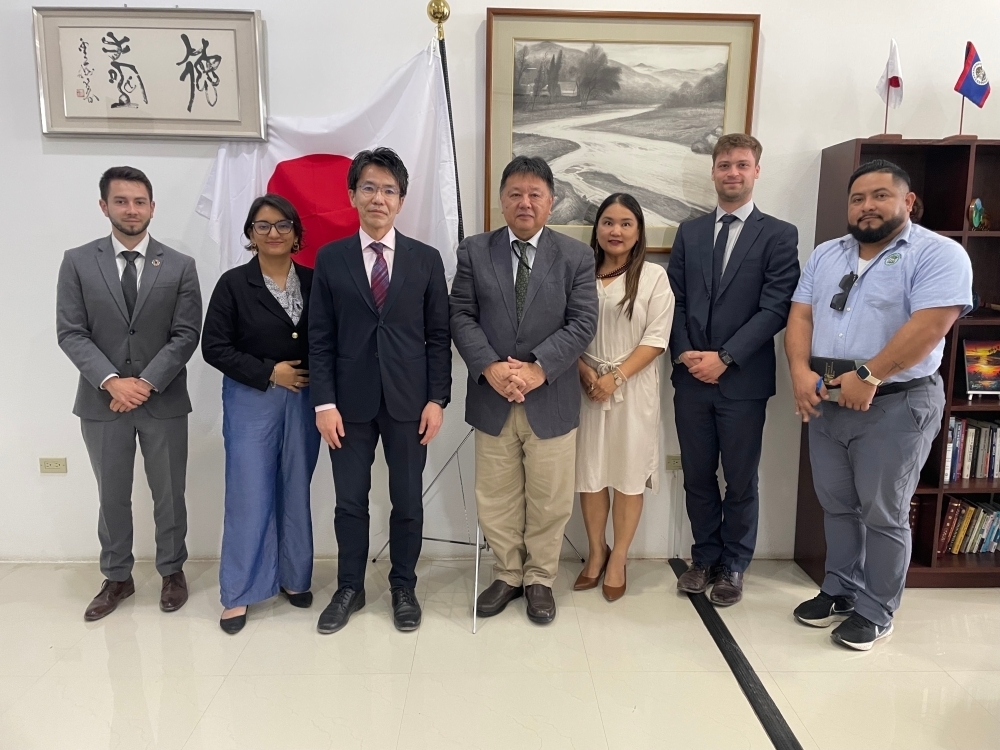
612On May 20, 2026, Ambassador Yamakura of the Embassy of Japan in Belize received a high-level courtesy call from a joint UNIDO and IPCU delegation. The meeting focused heavily on unlocking the economic potential of Belize’s green and blue industries, while exploring strategic avenues to attract foreign direct investment, particularly from Japanese enterprises.
Overcoming Regional Vulnerabilities
Member states of the Caribbean Community (CARICOM) face unique and compounding structural challenges. High vulnerability to climate change, frequent and severe natural disasters, and over-reliance on single-sector economies—such as tourism—have left many nations exposed to external economic shocks.
To mitigate these risks, regional industrial policies have increasingly prioritized diversifying their economic foundations by scaling up agricultural and manufacturing capabilities.
Originally signed as a grant aid agreement in December 2024, "The Project for Industrial Development and Technology Transfer in the Member States of the Caribbean Community" serves as a direct response to these vulnerabilities. The initiative spans 14 CARICOM countries and one territory, leveraging the technical expertise of UNIDO and the cutting-edge innovations of Japanese industry.
The Three Pillars of Progress
The joint initiative is built upon a comprehensive, three-pronged strategy designed to foster sustainable economic sovereignty across the Caribbean:
Investment and Business Promotion: Connecting Caribbean markets with international partners and actively inviting CARICOM government officials responsible for investment promotion to Japan to build bilateral networks.
Technology Transfer in the Agro-Industrial Sector: Providing advanced machinery and equipment utilizing Japanese commercial technologies to modernize local agricultural supply chains.
Policy Capacity Development: Conducting deep industrial structure analyses to help regional governments formulate robust, long-term industrial policies.
By blending Japanese technological innovation with UNIDO's framework for sustainable industrial development, the project aims to pave the way for a more diversified, climate-resilient, and financially secure Caribbean.